
When Success Isn’t an Option: What Failure Has Taught Me
When you work in payroll consultancy, you learn quickly that not every project will end with confetti and a high-five. Some do — and they’re incredibly rewarding. Others, despite your best efforts, don’t land. But those “failures” often teach as much (if not more) than the wins.
In this post, I want to share a couple of real-life lessons from both ends of that spectrum — and what they’ve taught me about change, leadership, and the value of true consultancy.
🚧 Lesson One: You Can’t Want Change More Than the Client Does
Sometimes, even with the right skills, knowledge, and a clear vision for improvement, success isn’t guaranteed. A few years ago, I was brought in by a company whose payroll operation was—bluntly—on the brink. The exec team had instructed them to seek independent support to understand the depth of the issues and fix what had become a failing payroll operation, so I spent months digging deep into their practices, systems, and processes. I created a detailed improvement plan with actionable steps and a roadmap to recovery.
It wasn’t just a diagnosis — it was a rescue plan. I was confident it would make a tangible difference.
But when the time came to act, the recommendations were rejected.
Despite knowing they were in a hole, the organisation chose to continue doing things the same way. Cost was the reason given, though I had provided a reduced and prioritised option that would still have made a meaningful impact. The reality is, even the best plan is worthless if there isn’t the will — or courage — to act on it.
What I learned was that executive sponsorship is essential, but not enough. You also need:
- The buy-in of the teams you’re working with, not just passive compliance but genuine engagement and understanding.
- The support of colleagues and internal peers, who need to feel you’re there to help, not to threaten or judge. When people feel threatened, they retreat. Collaboration disappears, and with it, the chance of success.
- A safe environment, where people feel comfortable sharing what’s really going on.
Without full support across all levels, even the best transformation efforts are likely to stall. And unfortunately, in this case, they did. The organisation ultimately lost major contracts due to ongoing service failures. Several members of the original team moved on. It was a clear example of how costly inaction can be.
What I’ve learned from experiences like this is that success in consultancy doesn’t just depend on your expertise — it depends on your environment and the people around you.
For a project to succeed, you need:
✅ Executive sponsorship that actively supports and enables change
🧠 Colleague and peer support, so you’re not seen as a threat or outsider
💬 Open communication and psychological safety to discuss what’s not working
🔄 Willingness to adapt — because transformation is uncomfortable, but necessary
Even the best-laid plans will fail if they aren’t met with commitment, trust, and collaboration.
From a consultancy perspective, it’s incredibly hard to lead meaningful change without those key ingredients. No consultant wants to override internal voices or go over heads — success comes when independence is respected, advice is heard, and the collective goal is improvement, not blame.
✅ Consultancy insight: As consultants, we can bring the expertise, tools, and insight — but without executive buy-in, change won’t stick. Clients must be willing to act, not just listen.
🌍 Lesson Two: Empowered Consultants Drive Results
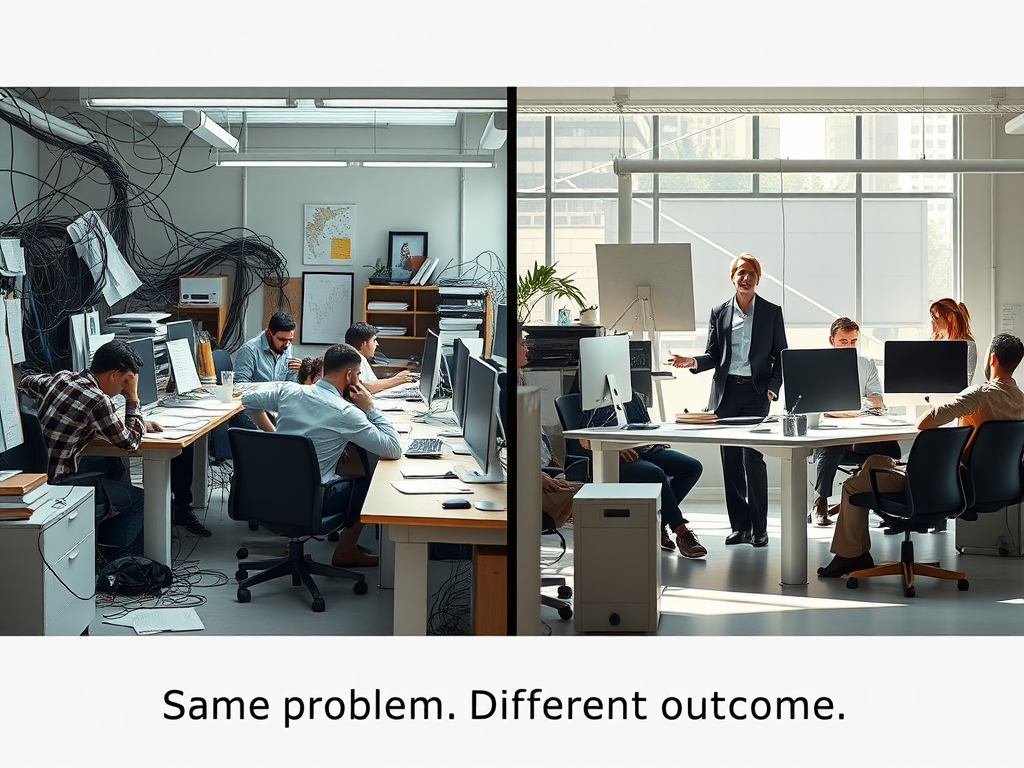
In contrast, one of my most satisfying and successful contracts was with a large FTSE-listed organisation undergoing a global payroll transformation. What started as a three-month piece of work turned into over 18 months of deep, cross-border collaboration.
I was given full accountability for leading the project — working with brilliant teams across the UK, India, and both US coasts. We tackled multiple time zones, complex systems, and a demanding implementation schedule, but because I had the authority to act, and the support of an aligned leadership team, we made significant and lasting progress.
Here’s what made the difference:
🔑 Clear remit and ownership — I was trusted to make decisions and drive change without unnecessary gatekeeping.
🕒 Flexibility and responsiveness — We adapted to timezone and culture differences with mutual respect, ensuring smooth collaboration across borders.
🙌 A motivated, skilled team — Everyone was invested in the outcome, contributing ideas and energy to solve problems as they arose.
📈 Momentum and progress — With aligned goals and autonomy, we kept things moving — and that built confidence and trust across the business.
It was hard work. It required trust. But it proved what’s possible when a consultant is empowered to lead, rather than simply advise.
✅ Consultancy insight: When organisations empower their consultants and give them the autonomy to act, it fast-tracks trust, buy-in, and delivery. Successful projects aren’t just well-planned — they’re well-supported.
💡 What It All Comes Down To
Consultants don’t have magic wands — but we do bring objectivity, experience, and often a clarity of vision that’s hard to see from the inside. But for transformation to succeed, there must be:
- Courage from leadership to accept guidance.
- Willingness to take difficult decisions.
- A partnership approach that values independence and expertise.
If you’re considering a transformation — especially in payroll, HR, or operational change — ask yourself: are we really ready to change? And are we willing to listen when help arrives?
Because sometimes, it’s the difference between stagnation and success.
Looking to future-proof your payroll or HR function?
Let’s talk about how external insight and a structured roadmap can turn ambition into action. Contact me at eira@eiraconsulting.co.uk

 eiraconsulting.co.uk
Leave a comment