
What a Festival Taught Me About Professional Identity

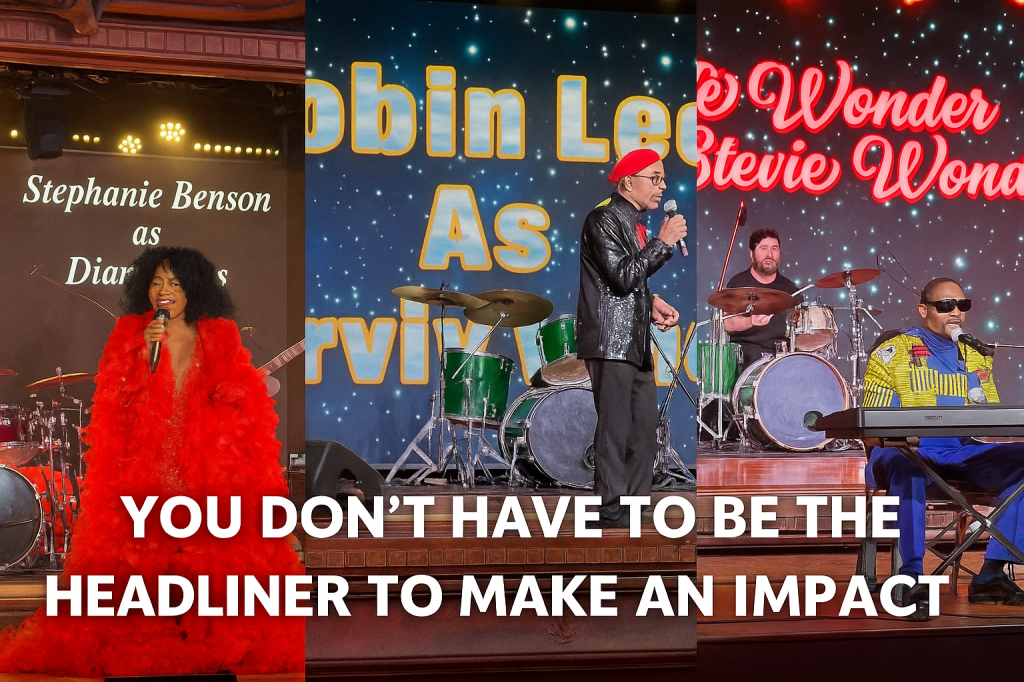
Last weekend, I had the most brilliant time celebrating my husband’s birthday at a tribute festival. The line-up was pure nostalgia: Diana Ross, Lionel Richie, Marvin Gaye, Stevie Wonder… okay, not the real ones — but incredibly talented performers bringing their songs and spirit to life.
What struck me wasn’t just how great the music was, but how openly the performers embraced their roles. They weren’t pretending to be the real stars — they were paying tribute to them. Celebrating them. Owning the stage not as impersonators, but as artists in their own right. They weren’t trying to fool us — and because of that, we were all in.
It made me reflect on something that’s been on my mind a lot lately — the difference between performing a role and being in one.
The Pressure to Perform
In professional life, it can be so easy to slip into “performance mode”. Whether it’s in a meeting, on LinkedIn, or in front of a client, we sometimes feel pressure to present a more polished, more confident, more whatever-the-moment-demands version of ourselves.
We hide behind titles. We speak in acronyms. We act like we have all the answers. It’s often not intentional — it’s just habit. Survival, even. But it can slowly erode the most important thing we bring to any role: ourselves.
There’s Power in Transparency
What made those tribute performers really connect with the audience wasn’t how closely they resembled the originals — it was their honesty. They were up there to celebrate greatness, not claim it.
The same applies to work.
Being honest about what you bring, what you don’t, what you’ve learned, what you’re learning — that’s what builds trust. Whether you’re in a senior role, starting out, or somewhere in between, there’s immense value in showing up as your whole self.
Not perfect.
Not polished.
Not pretending.
Just you.
Honouring Those Who Inspire Us (Without Copying Them)
Just like those tribute acts channelling the spirit of their idols, it’s absolutely fine to look up to people — to be inspired by their confidence, their leadership style, their way with words. But the goal isn’t to become them.
You don’t have to be the “headliner” to make an impact. You don’t have to perform for the crowd. You just need to bring your own experience, voice, and value to the stage you’re on — whatever that looks like.
Leadership Insight: Let Others Be Themselves Too
If you’re in a leadership role — even unofficially — remember this: when you show up authentically, you give others permission to do the same. Your team doesn’t need perfection. They need presence. They need to know that it’s okay to speak up, ask questions, or admit they’re figuring it out as they go.
That’s how strong cultures are built — not through performance, but through trust.
Final thought:
That weekend, I didn’t go home thinking “Was that really Diana Ross?”
I went home thinking, “That was a brilliant performance — full of fun, energy, and joy.”
And maybe that’s the lesson: when you stop trying to be someone else, and own what you bring to the stage — that’s when the audience really connects.
What do you think?
Have you ever caught yourself putting on a “professional performance” at work? How do you stay true to yourself in high-pressure environments?
I’d love to hear your thoughts.

 eiraconsulting.co.uk
Leave a comment